
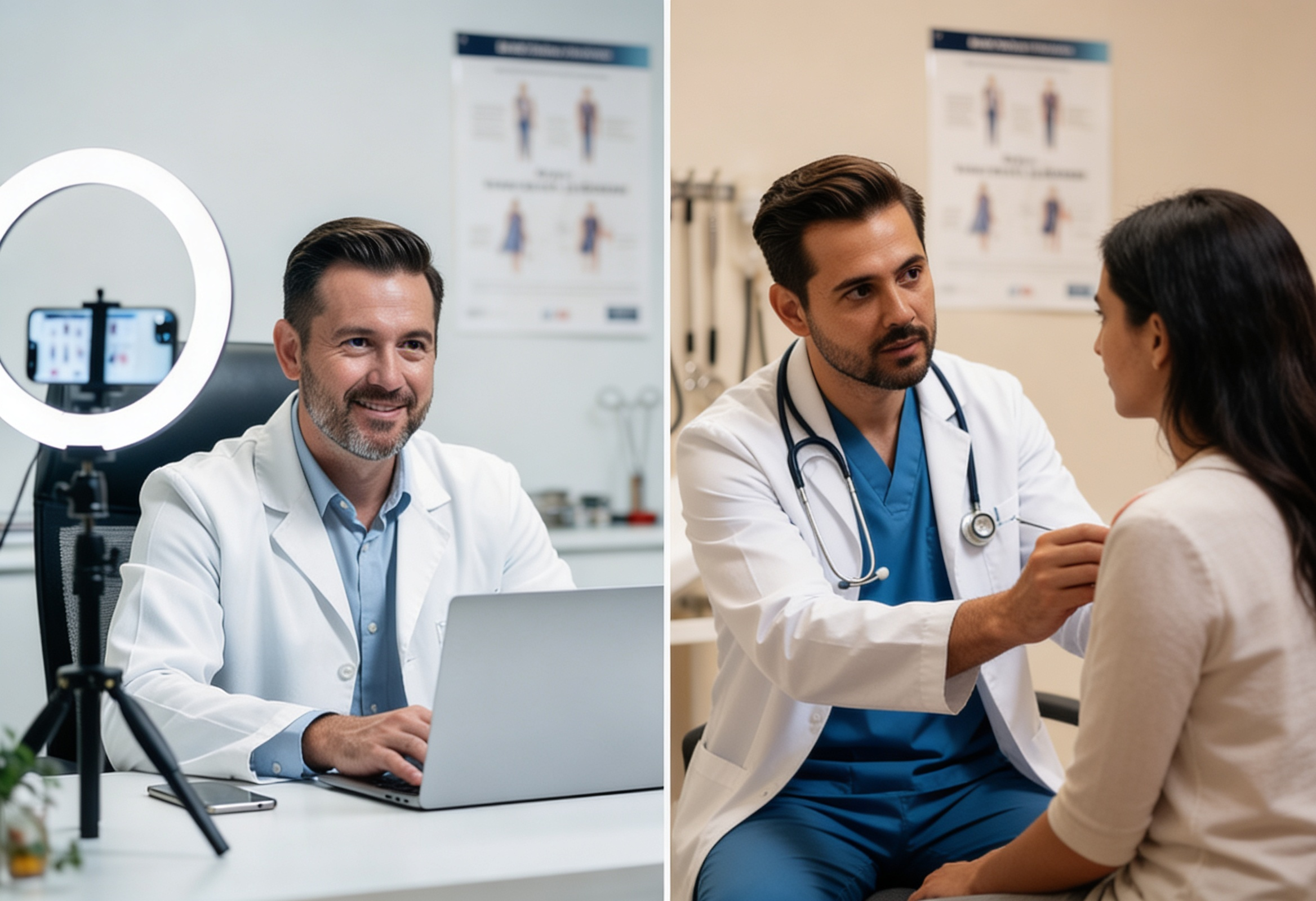
There’s been a growing push for physicians to build a presence online. Social media platforms are filled with clinicians sharing insights, opinions, and sometimes partnering with industry. For some, it feels like a natural extension of a medical career—or even something worth exploring if you’re not already doing it.
But for many physicians, the more useful question isn’t how to become an influencer. It’s whether that path actually aligns with their goals in the first place.
Influence in Medicine Works Differently
The idea of influence doesn’t translate cleanly from other industries into healthcare. In most fields, influence is measured by reach—followers, engagement, visibility. In medicine, it’s built through something much less visible: trust.
A physician with a large online following may have reach, but that doesn’t always carry the same weight as someone who is known within their specialty for sound clinical judgment. Decisions around patient care, referrals, and collaboration are still largely driven by experience, reputation, and peer relationships—not content output.
Even as social media use among physicians continues to grow, what drives trust hasn’t changed. It’s still grounded in competence, communication, and consistency—not audience size.
Why the Influencer Model Doesn’t Fit Most Physicians
There are practical reasons why becoming a “medical influencer” may not make sense for many clinicians.
Time is the most obvious. Physicians already spend a large portion of their day on documentation and administrative tasks, often extending into evenings. Adding content creation on top of that isn’t a small commitment—it’s another layer of work competing with time that could be spent on patient care, recovery, or personal life.
There’s also a mismatch between what performs well online and what’s clinically useful. Social platforms reward simplicity, strong opinions, and quick takeaways. Medicine rarely works that way. The nuance required for safe, evidence-based care doesn’t always translate into content that gains traction, which can create a gap between visibility and credibility.
Motivation is another factor. As more physicians engage online, industry partnerships often follow. While those opportunities can be legitimate, they introduce a layer of complexity that can blur the line between education and promotion—something patients and peers are increasingly aware of.
The Risks Are Worth Considering
What often gets overlooked are the risks that come with increased visibility.
Patient privacy is one of the biggest. Even when cases are de-identified, it can still be possible for patients—or their families—to recognize themselves based on details. There have been real cases where physicians faced disciplinary action for posts that didn’t include names or faces but still raised concerns.
There’s also the permanence of online content. Posts don’t always disappear, even if deleted. What’s shared today can resurface later, sometimes in contexts you don’t control. That creates long-term professional considerations, especially in a field where reputation matters.
Add in the potential for licensing board scrutiny, and the stakes become clearer. Social media activity is increasingly part of how professionalism is evaluated, and missteps—intentional or not—can have real consequences.
On a more personal level, there’s also the impact on burnout. Many physicians are already operating at capacity, and maintaining an online presence adds another demand. It can also introduce new stressors—comparison, criticism, or even direct harassment—that don’t exist in traditional clinical work.
You May Already Have More Influence Than You Think
One of the more overlooked points in this conversation is that most physicians already have influence—they just don’t always frame it that way.
Every day, clinicians influence colleagues through case discussions, trainees through teaching, and patients through communication, trust, and guidance. That influence is immediate, contextual, and meaningful. It directly impacts outcomes in a way that online content may not.
In many cases, this is where the most important influence actually happens—not online, but in the exam room and within professional relationships.
What Actually Builds Trust
The factors that build trust in medicine haven’t changed—and they don’t require a platform.
Patients consistently place the most value on clear communication, feeling heard, and confidence in their clinician’s judgment. Continuity and reliability in care also play a major role.
Even small behaviors—like allowing a patient to speak without interruption or maintaining eye contact—can have a measurable impact on trust and outcomes.
Beyond patient care, professional reputation is still shaped by peer respect, clinical competence, collaboration, and ongoing learning. These forms of growth may be less visible, but they tend to be more durable over time.
When Social Media Does Make Sense
None of this means physicians shouldn’t be online.
In the right context, it can be valuable—especially when used with clear intent.
Social media may make sense for physicians who want to share accurate, evidence-based information, contribute to education within a specific niche, or explore non-clinical opportunities like writing, consulting, or speaking. It can also be a useful space for addressing misinformation when done thoughtfully.
The difference often comes down to focus. It’s less about building a broad personal brand and more about being a credible, useful voice in a specific area.
A More Practical Approach
For physicians considering building a presence, a more grounded approach is often more sustainable.
Focusing on a specific area of expertise, prioritizing accuracy over engagement, and being selective about what and how you share can help maintain alignment with clinical values. Treating any public presence as an extension of your professional thinking—not a separate identity—can also make it easier to manage over time.
Final Thought
For many physicians, the goal isn’t necessarily visibility—it’s credibility, clarity, and a career that aligns with how they want to work and live.
If a public platform supports that, it may be worth exploring. But it’s not a requirement, and it’s not the only way to create meaningful impact.
In many cases, the most important influence still happens in the exam room, in conversations with colleagues, and in the decisions made every day.
Disclaimer: The viewpoint expressed in this article is the opinion of the author and is not necessarily the viewpoint of the owners or employees at Healthcare Staffing Innovations, LLC.